Cannabis edibles work differently than flower — they're processed by your liver into a more potent compound. Here's what the science says about dosing, timing, and staying comfortable.
There's a reason the most common edible story starts with "I ate the whole thing and then…"
Edibles are the most misunderstood consumption method in cannabis. Not because they're complicated, but because they work fundamentally differently from smoking or vaping — and most people don't learn that until they've already had an uncomfortable evening on the couch.
This guide covers the science of how edibles work in your body, why the experience feels different from flower, how to dose properly, and what to do if you've had too much. No hype, no scare tactics — just the information you need to make good decisions.
Why Edibles Feel Different: The Science of First-Pass Metabolism
When you smoke or vape cannabis, THC travels from your lungs directly into your bloodstream and reaches your brain within minutes. When you eat an edible, the path is entirely different — and that difference explains almost everything about the edible experience.
Swallowed THC passes through your digestive system, gets absorbed through the stomach and intestines, and travels to your liver before entering general circulation. In the liver, an enzyme called CYP2C9 converts delta-9 THC into a metabolite called 11-hydroxy-THC.
This is the key to understanding edibles. 11-hydroxy-THC crosses the blood-brain barrier more efficiently than regular THC and binds to cannabinoid receptors with significantly higher affinity. Research dating back to the early 1970s — when scientists at the National Institutes of Health administered both compounds intravenously — found that 11-hydroxy-THC produced a faster onset and more intense psychoactive experience than equivalent doses of delta-9 THC. More recent preclinical research suggests the metabolite may be two to three times more potent.
This is why 5 milligrams eaten can feel stronger than 5 milligrams smoked. It's not that edibles are "more cannabis." Your liver is converting THC into a more potent compound. You're essentially getting a different molecule than what was on the label.
Onset Times: The Part Where Patience Matters
The delayed onset is where most edible problems begin. Here's what the research consistently shows:
Standard edibles — gummies, chocolates, baked goods — take 30 to 90 minutes to produce noticeable effects, with some people not feeling anything for up to two hours. Peak effects typically arrive two to three hours after consumption. The full experience can last four to eight hours, with residual effects sometimes persisting longer.
Several factors affect timing. An empty stomach generally means faster onset. A meal high in fat increases THC absorption through the lymphatic system, which can intensify effects. Individual metabolism varies considerably — genetic differences in CYP2C9 enzyme activity mean some people convert THC to 11-hydroxy-THC more efficiently than others. Body weight, tolerance, and even gut health all play roles.
Cannabis beverages and sublingual products — tinctures held under the tongue, lozenges — behave differently. Sublingual absorption bypasses the digestive system, producing effects in 15 to 45 minutes. Some cannabis beverages use nanoemulsion technology that breaks cannabinoids into microscopic particles for faster absorption, with manufacturers claiming onset times of 10 to 20 minutes. These products may feel closer to the smoking experience in terms of timing, though the duration is still typically longer than inhalation.
The critical point: the most common edible mistake is taking a second dose because "nothing's happening." Then both doses hit simultaneously. Wait at least two hours before considering more.
Dosing: What the Numbers Actually Mean
Vermont limits adult-use edible products to 5 milligrams of THC per serving, with a maximum of 50 milligrams per package. This is among the more conservative limits nationally — thirteen states allow 10 milligrams per serving — and it exists for good reason.
Here's a practical dosing framework based on experience level:
For someone who has never tried edibles or has very low tolerance, start low, go slow. 2.5 milligrams is a reasonable starting point. This is half a standard Vermont serving. At this dose, most people experience mild relaxation without significant impairment. It may feel underwhelming — that's the point. You're calibrating.
At 5 milligrams — one standard serving — most beginners will feel clear effects. Relaxation, mild euphoria, some alteration in sensory perception. This is the dose where you learn how your body responds.
At 10 milligrams — two servings — effects are pronounced for most people without significant tolerance. Experienced users may find this comfortable; beginners often find it overwhelming. This is not a recommended starting dose.
Above 15 milligrams, effects intensify substantially and may include anxiety, confusion, or physical discomfort in people without established tolerance.
These numbers are generalizations. Individual responses vary based on metabolism, body composition, tolerance, recent food intake, and the specific product. But the principle holds: you can always eat more. You cannot eat less.
The Product Landscape
Not all edibles are created equal, and the format matters more than most people realize.
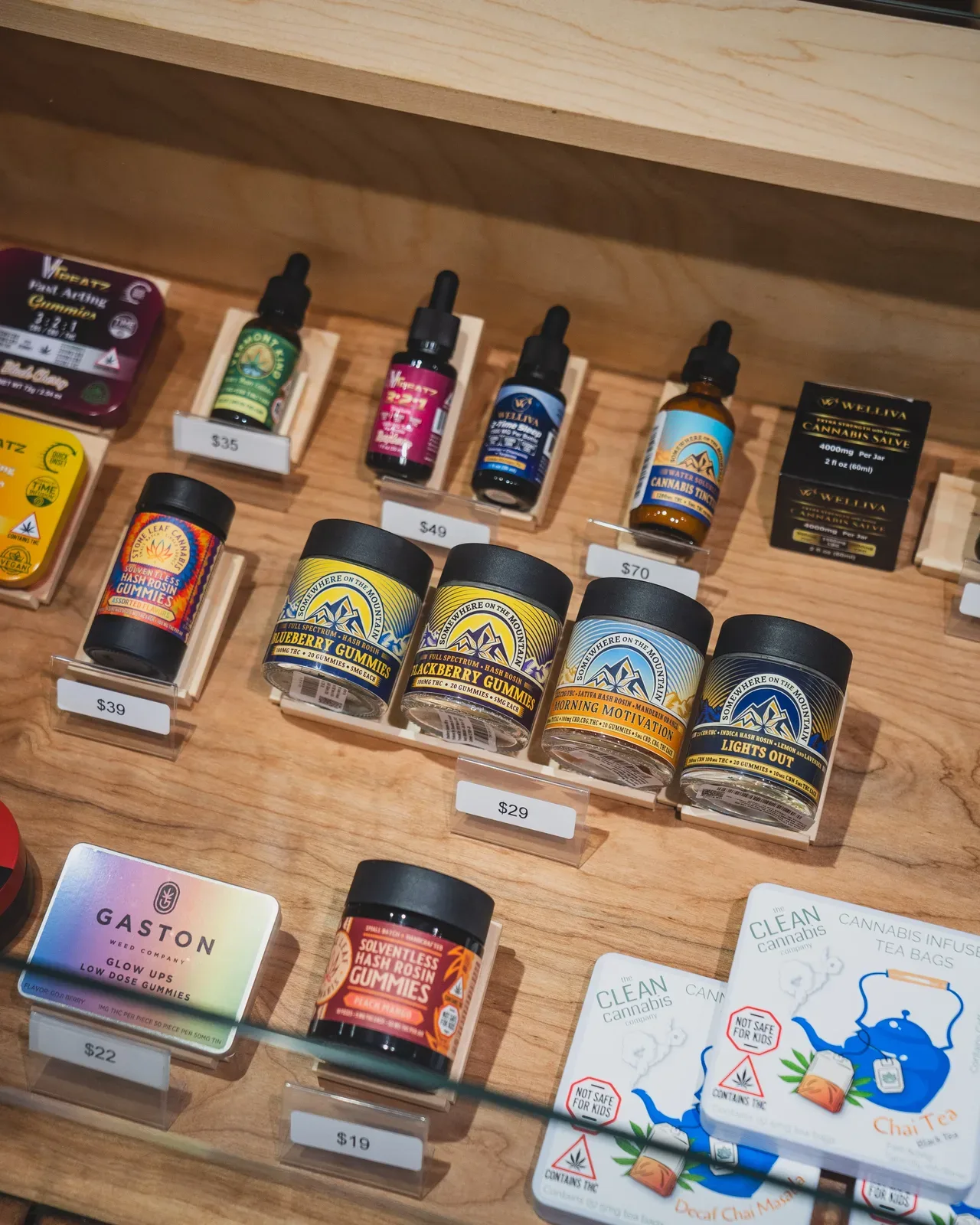
Gummies are the most common format and the easiest to dose precisely. Each piece contains a measured amount of THC, and you can cut them for smaller doses. The sugar and gelatin matrix means relatively consistent absorption.
Chocolates introduce a variable — fat content. THC is fat-soluble, and the cocoa butter in chocolate can increase absorption. Some people report stronger effects from chocolate edibles at the same THC dose compared to gummies.
Baked goods — brownies, cookies — are the hardest to dose accurately, especially homemade ones. THC distribution may not be uniform throughout the product, meaning one bite could contain significantly more or less than another.
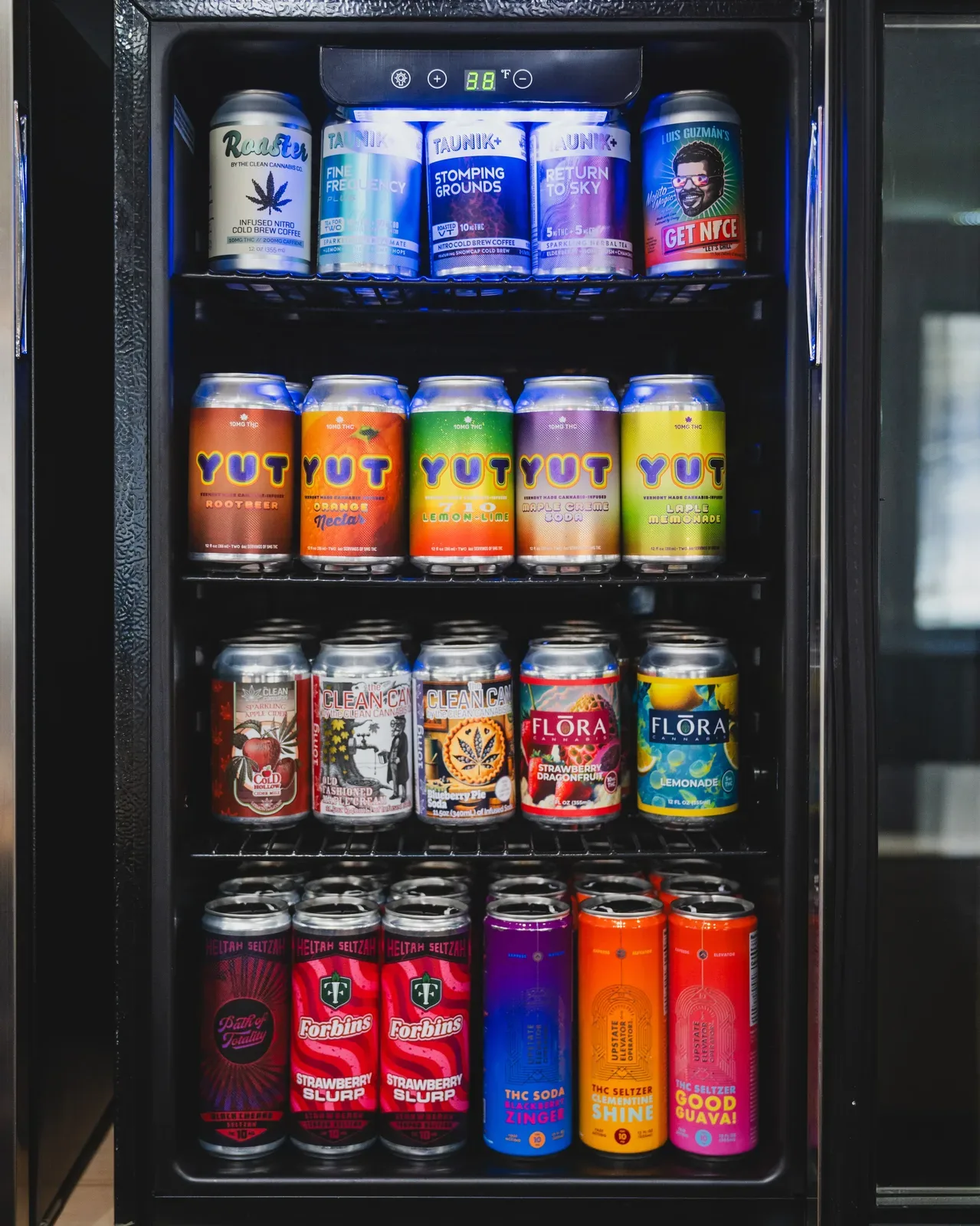
Beverages are the fastest-growing edible category. Cannabis-infused drinks appeal to people looking for a social consumption experience similar to beer or wine. Most are formulated at 2.5 to 10 milligrams per serving. The liquid format generally means faster onset than solid edibles, and many brands use emulsification technology to improve absorption speed.
Tinctures offer the most precise dosing control. A graduated dropper lets you measure exact amounts. When held under the tongue for 60 to 90 seconds before swallowing, absorption is faster than swallowed edibles. When swallowed directly, they behave more like standard edibles.
Capsules provide pharmaceutical-style precision — exact doses in a swallowable format — but follow the same slow onset as other swallowed edibles.
What to Do If You've Had Too Much
It happens. Even careful people sometimes misjudge a dose, eat an edible on an unexpectedly empty stomach, or encounter a product that hits harder than expected. Here's what to know:
No one has ever died from cannabis overconsumption alone. That's worth stating clearly. But consuming too much THC can produce several hours of genuine discomfort — anxiety, racing heart, paranoia, nausea, dizziness, confusion, or an overwhelming sense that something is wrong. These effects are temporary, even though they may not feel that way in the moment.
If you or someone you're with has consumed too much, find a calm, comfortable spot. Drink water. Eat something simple. Remind yourself — or the person you're helping — that this will pass. Most acute episodes resolve within two to four hours, though lingering effects may last longer depending on the dose.
Black peppercorns are a folk remedy with some scientific basis — the terpene beta-caryophyllene, abundant in black pepper, binds to CB2 receptors and may help moderate THC's anxiety-producing effects. Chewing a few peppercorns or simply smelling ground black pepper is worth trying.
CBD may also help. Research suggests CBD can moderate THC's psychoactive effects by acting as a negative allosteric modulator at the CB1 receptor. If you have a CBD tincture or product available, it may take the edge off. This is one reason balanced THC/CBD edibles tend to produce milder, more manageable experiences.
Beyond that, time is the only real remedy. The peak will pass. You will feel normal again.
Edibles and Existing Medications
This is a conversation most edible guides skip, and it shouldn't be.
Because edibles are processed through the liver's cytochrome P450 enzyme system — the same system that metabolizes many prescription medications — there is real potential for drug interactions. CBD in particular can inhibit certain CYP450 enzymes, potentially slowing the breakdown of blood thinners, anti-seizure medications, some antidepressants, and other drugs. This can increase the effective concentration of those medications in your body.
If you take prescription medications regularly, talk to your doctor or pharmacist before trying edibles. This isn't cautionary boilerplate — it's practical pharmacology.
Vermont's Regulatory Framework
Vermont's edible regulations reflect a conservative, consumer-safety approach. Key limits for adult-use products:
5 milligrams of THC maximum per serving. 50 milligrams of THC maximum per package. Products must be clearly labeled with THC content per serving and per package. Child-resistant packaging is mandatory. Products cannot resemble conventional candy or be designed to appeal to children.
For context, these limits mean a 10-piece gummy package in Vermont contains 50mg total — compared to 100mg maximum in states like California and Colorado. Vermont's lower per-serving limit also means beginners are somewhat protected from accidentally taking too much in a single piece, though cutting a 5mg gummy in half is still advisable for first-timers.
The state also prohibits cannabis-infused food products from being manufactured on shared food processing equipment, maintaining a separation between cannabis and conventional food production.
The Honest Assessment
Edibles are a legitimate consumption method with real advantages — no respiratory irritation, precise dosing, long-lasting effects useful for sleep or sustained relief, and discretion. For many people, they're the preferred way to use cannabis.
But they demand more respect than most people give them. The delayed onset, the liver's conversion of THC into a more potent metabolite, and the extended duration all mean that careless use produces worse experiences than careless use of almost any other cannabis product.
Start low. Go slow. Give your body two hours to tell you what's happening. And if you're trying edibles for the first time, do it somewhere comfortable, with someone you trust, on a day when you have nowhere to be.
If you have questions about what edibles might suit you, stop by the dispensary in Woodstock. We talk people through this every day — including plenty of folks who are trying edibles for the first time. There's nothing you could ask that would surprise us.
Sunkissed Farm is at 4374 West Woodstock Road in Woodstock, Vermont. Open seven days a week. Questions? hello@sunkissed.farm or 802-222-6920.
Research Sources
Frequently Asked Questions
How long do cannabis edibles take to kick in?
Most standard edibles — gummies, chocolates, baked goods — take 30 to 90 minutes to produce noticeable effects, with peak effects arriving two to three hours after consumption. Cannabis beverages and sublingual products may act faster, sometimes within 15 to 45 minutes. Always wait at least two hours before taking a second dose.
What is a good edible dose for a beginner?
Start with 2.5 milligrams of THC — half of one standard Vermont serving. At this dose, most people feel mild relaxation without significant impairment. If that feels comfortable, try 5 milligrams next time. The goal is to find your minimum effective dose, not to overwhelm your system.
Why do edibles feel stronger than smoking?
When you eat THC, your liver converts it into 11-hydroxy-THC, a metabolite that crosses the blood-brain barrier more efficiently and may be two to three times more potent than regular THC. You're essentially absorbing a different, stronger compound than what enters your bloodstream when you smoke.
How long do edible effects last?
Typically four to eight hours for the primary effects, though residual effects can linger longer — especially at higher doses. This is significantly longer than smoking or vaping, where effects usually dissipate within two to three hours. Plan accordingly and don't consume before driving or handling responsibilities.
What should I do if I take too much?
Find a comfortable spot, drink water, and eat something simple. The effects will pass — usually within two to four hours from peak intensity. Chewing black peppercorns may help reduce anxiety due to the terpene beta-caryophyllene. CBD can also moderate THC's effects if available. No one has ever died from cannabis overconsumption alone.
Can I take edibles with my prescription medications?
Edibles are processed through the same liver enzyme system that metabolizes many prescription drugs. CBD in particular can inhibit certain enzymes, potentially increasing the effective concentration of blood thinners, anti-seizure medications, and some antidepressants. Consult your doctor or pharmacist before combining edibles with prescription medications.