Vermont law allows adults to grow two mature and four immature cannabis plants per dwelling. Here's how to make it work in a short-season northern climate — from legal limits to living soil to harvest timing.
Vermont's Home Grow Law: What You're Actually Allowed to Do
Vermont permits any adult 21 or older to cultivate cannabis at home without a license, permit, or registration. The rules come from 18 V.S.A. § 4230e, and they're straightforward — but the details matter.
Each dwelling unit may contain two mature cannabis plants and four immature cannabis plants, regardless of how many adults live there. A couple sharing an apartment gets two mature and four immature total, not per person. "Dwelling unit" means the building or part of a building used as a primary home or residence. A detached garage or shed on the same property doesn't count as a separate dwelling unit.
Here's the part that surprises most new growers: cannabis you harvest and store from your home plants does not count toward Vermont's one-ounce possession limit. You can legally store your entire harvest at home, provided you keep it in an indoor facility on the same property where it was cultivated and take reasonable precautions to prevent unauthorized access. A locked closet or cabinet in your house meets this standard. A tote in an unlocked shed probably doesn't.
Your plants must be grown on property you lawfully possess or where you have written consent from the property owner. They must be screened from public view — a fenced backyard, a greenhouse, or a grow tent all qualify. Access must be limited to the cultivator and other adults 21 and older who have the cultivator's permission. Violations of the screening and access requirements carry civil penalties ranging from $100 for a first offense to $500 for a third, but they won't result in criminal charges.
One more legal note: you cannot sell, trade, or barter any cannabis you grow at home. Vermont's commercial cannabis market operates under a separate licensing system through the Cannabis Control Board. Home grow is strictly personal use.
Understanding Your Growing Season
Vermont's latitude — roughly 43°N to 45°N — creates a distinctive growing window that shapes every decision you'll make. The state's average last frost falls between May 15 and June 1 depending on elevation and proximity to bodies of water. The first fall frost typically arrives between September 15 and October 10.
That gives you approximately 100 to 140 frost-free days, which is tight for cannabis. Most photoperiod varietals need 60 to 90 days of flowering alone, and they don't begin flowering outdoors until daylight drops below roughly 14 to 14.5 hours — which in Vermont doesn't happen until mid-to-late August. A photoperiod plant started outdoors after last frost will begin flowering in August and need to finish by early-to-mid October, racing against cold nights and autumn rain.
This is the central tension of growing cannabis in northern New England. You have extraordinary summer sunlight — Vermont's long June days deliver over 15 hours of direct light — but a compressed window on the back end that demands careful varietal selection and timing.
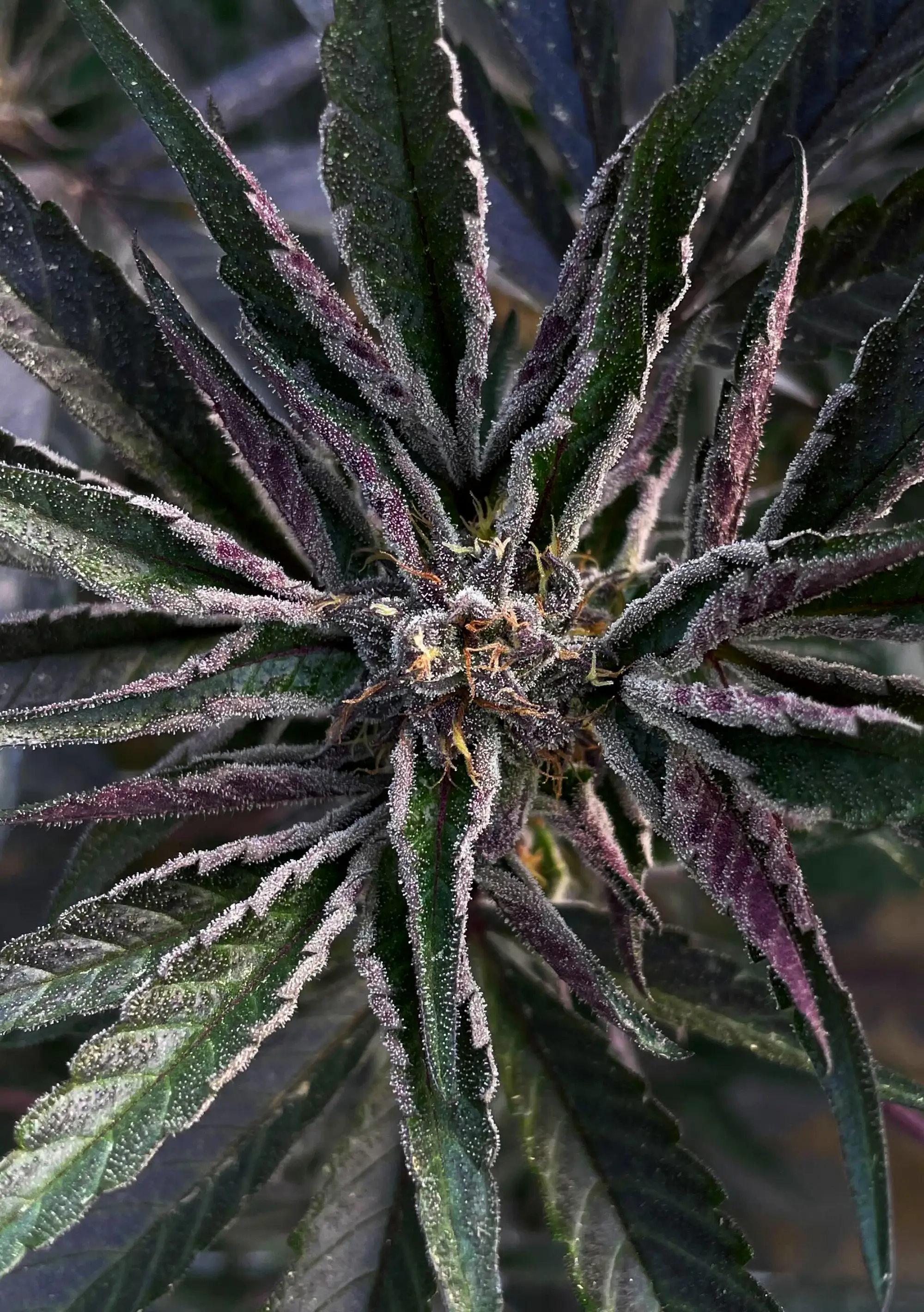
Temperature matters as much as frost dates. Cannabis grows best between 65°F and 85°F during the day with nighttime temperatures above 50°F. Vermont's summer days reliably hit this range, but September nights in the Upper Valley and higher elevations can drop into the 30s and 40s. Cool nights during flowering aren't necessarily harmful — they can actually enhance anthocyanin production, which is why Vermont outdoor flower often develops deep purples — but sustained temperatures below 50°F slow growth significantly and wet cold invites mold.
Autoflower vs. Photoperiod: The Most Important Decision
For Vermont home growers, the choice between autoflowering and photoperiod genetics is the single most consequential decision. Everything else — soil, nutrients, training — is secondary to getting this right for your climate.
Autoflowering varietals flower based on age rather than light cycle. They typically move from seed to harvest in 70 to 100 days regardless of how many hours of light they receive. This independence from photoperiod makes them exceptionally well suited to Vermont's short season. Plant autoflower seeds outdoors after your last frost — late May to early June — and you'll harvest in August or early September, well before frost becomes a concern.
Autoflowers descended from Cannabis ruderalis, which evolved in the harsh climates of Central Asia and Russia. That genetic heritage translates to cold tolerance that photoperiod varietals simply don't possess. Modern autoflowers have closed the quality gap dramatically. Twenty years ago, autoflowers were small plants with mediocre potency. Today's breeding programs produce autoflowering varietals exceeding 20% THC with complex terpene profiles.
The trade-offs are real, though. Autoflowers tend to be smaller, yielding less per plant than a well-grown photoperiod. You can't clone them — every plant starts from seed. And because their lifecycle is fixed, they can't recover from early stress the way a photoperiod plant can. If a late-May frost sets an autoflower back two weeks, those two weeks are gone forever.
Photoperiod varietals offer larger yields, cloning capability, and the full genetic diversity of the cannabis world. In Vermont, they demand more planning. You'll want to start seeds indoors in April under artificial light, giving plants six to eight weeks of vegetative growth before hardening off and transplanting outdoors after last frost. When daylight hours shorten in August, they'll transition to flowering.
The risk with photoperiod plants in Vermont is the finish line. Indica-dominant varietals with shorter flowering periods — 55 to 65 days — are your safest bet. A 70-day flowering varietal that starts flowering August 15 won't finish until late October, which is a gamble in most Vermont locations. Sativa-dominant varietals with 80- to 90-day flowering periods are generally not viable for Vermont outdoor growing unless you have a greenhouse.
For first-time growers in Vermont, autoflowers are the practical choice. For experienced growers willing to start indoors and manage the timeline, early-finishing photoperiod varietals can produce exceptional results.
Soil: Why Living Soil Matters for Home Growers
The medium you grow in determines nearly everything about your plant's health, terpene expression, and the quality of what you eventually consume. For home growers, living soil offers the most forgiving, lowest-maintenance, and arguably highest-quality approach.
Living soil is exactly what it sounds like — soil teeming with a functioning ecosystem of bacteria, fungi, protozoa, and other microorganisms that work together to break down organic matter and deliver nutrients to plant roots in forms they can absorb. It's how cannabis grew for thousands of years before synthetic fertilizers existed.
A 2023 study from Columbia University's Department of Chemistry provides the strongest evidence for why this matters. Researchers compared genetically identical cannabis plants grown in living soil under natural sunlight against the same genetics grown indoors in synthetic media. The outdoor living-soil plants produced significantly greater diversity and quantity of terpenes — particularly sesquiterpenes like beta-caryophyllene and alpha-humulene — and showed fewer degraded and oxidized cannabinoids. The researchers proposed that the richer terpene production actually functions as an antioxidant shield, protecting cannabinoids from degradation.
For home growers, a basic living soil mix follows a simple ratio: roughly one-third quality compost, one-third aeration material (perlite, pumice, or rice hulls), and one-third peat moss or coconut coir. Add amendments like kelp meal, fish bone meal, neem seed meal, and a mycorrhizal inoculant. Vermont's local garden centers and farm supply stores carry most of these components.
The beauty of living soil for beginners is that it's genuinely difficult to over-feed your plants. The microbial community regulates nutrient availability — your job is to keep the soil moist (not wet) and let biology do the work (Journal of Cannabis Research). Compare this to synthetic nutrient systems where miscalculating parts per million can burn roots or lock out essential minerals.
If you're growing in containers — which many Vermont home growers do for the flexibility of moving plants during cold snaps — use at least 15- to 20-gallon fabric pots. Larger soil volume means a more stable and diverse microbial ecosystem and more consistent moisture levels.
A Vermont Growing Calendar
Early April: Start photoperiod seeds indoors under 18 hours of light. Use a simple seedling heat mat to maintain 75°F soil temperature. If growing autoflowers, wait — starting them indoors in containers you'll transplant from is fine, but they don't need as much lead time.
Late May – Early June (after last frost): Transplant hardened-off seedlings outdoors or direct-sow autoflower seeds. "Hardening off" means gradually exposing indoor-started plants to outdoor conditions over 7 to 10 days — a few hours of direct sun the first day, increasing daily. Skipping this step will sunburn your plants.
June – July: Vegetative growth. Vermont's 15+ hours of summer daylight drive explosive growth in photoperiod plants(Ahrens et al. (2024) — Photoperiod Study). Water consistently, top-dress with compost or worm castings every few weeks, and train plants as desired. Autoflowers should be flowering by mid-to-late June.
August: Photoperiod plants begin transitioning to flower as day length drops below 14.5 hours. This is when pest and mold vigilance becomes critical. Caterpillars — specifically corn earworm and hemp borer — are the most damaging Vermont-specific pest for outdoor cannabis. Inspect buds carefully every few days. The organic pesticide Bacillus thuringiensis (Bt) is effective if applied before caterpillars establish.
Late August – September: Autoflower harvest window. Watch trichomes with a jeweler's loupe or phone macro lens. Cloudy trichomes indicate peak THC; amber trichomes signal conversion to CBN and more sedative effects. Harvest when roughly 10 to 20 percent of trichomes have turned amber for a balanced effect.
Late September – Mid October: Photoperiod harvest window. Monitor weather forecasts obsessively. A single night below 28°F can damage flowers. If heavy rain threatens during the final weeks, consider tarping or moving container plants to shelter — wet buds during late flowering invite botrytis (bud rot), which can destroy a crop overnight.
October – November: Drying and curing. Hang whole plants or branches in a dark, ventilated space at 60°F and 60% relative humidity for 10 to 14 days. When small stems snap rather than bend, move trimmed buds to glass mason jars. Burp the jars daily for the first two weeks, then every few days for another month. Proper curing transforms harsh, grassy-tasting flower into smooth, complex, aromatic cannabis.
Common Mistakes Vermont Growers Make
Starting too early outdoors. The temptation to transplant on the first warm May day is strong. Resist it. One late frost can kill an unprotected plant. Memorial Day weekend is the traditional safe date for the southern Vermont valleys. Higher elevations should wait until early June.
Ignoring mold pressure. Vermont's autumn humidity is the single biggest threat to outdoor cannabis. Mold doesn't announce itself — it starts inside the densest part of the bud where airflow is weakest. By the time you see it on the outside, you've likely lost more than you think. Defoliate strategically throughout flowering to improve airflow. Avoid overhead watering. Harvest before sustained rain events when possible.
Overwatering in containers. Living soil should feel like a wrung-out sponge — moist but not saturated. Waterlogged roots can't access oxygen, and anaerobic conditions kill beneficial microbes. Lift your pots regularly. If they're heavy, wait. If they're light and the top inch of soil is dry, water thoroughly until you see some runoff from the bottom.
Choosing the wrong genetics. An 11-week flowering sativa bred for Southern California will not finish in Vermont. Full stop. Research your varietal's flowering time. Look for indica-dominant genetics or autoflowers bred for northern climates. Ask your seed provider specifically about finish dates in northern latitudes.
Neglecting the cure. Drying too fast (temperatures above 75°F, humidity below 40%) destroys volatile terpenes. Drying too slow (stagnant air, humidity above 70%) breeds mold. The cure is where good cannabis becomes exceptional cannabis. Don't rush it.
A Note on Seeds: Federal Law Is Changing
Until November 12, 2026, cannabis seeds remain federally protected for domestic shipping under the 2018 Farm Bill's definition of hemp. Seeds themselves contain virtually no THC, so they've been treated as legal hemp products regardless of what the mature plant will produce.
Section 781 of the 2026 Agricultural Appropriations Bill changes this. Signed in November 2025, it reclassifies seeds based on the THC content of the mother plant rather than the seed itself. After the November 2026 deadline, seeds from cannabis varietals exceeding 0.3% total THC will be classified as Schedule III controlled substances, making interstate shipping federally illegal.
What this means for Vermont home growers: if there are genetics you want to grow, purchase seeds before November 2026. Properly stored seeds — cool, dark, and dry — remain viable for five or more years. Vermont's home grow law itself is not affected; you'll still be able to cultivate your two mature and four immature plants. But sourcing seeds from out-of-state will become significantly more complicated.
Vermont-based seed options may emerge as the in-state market matures, but the selection will inevitably be more limited than what's currently available from established national seed banks. Plan accordingly.
Why Growing Your Own Matters
There's a practical argument for home growing — you control exactly what goes into your soil and onto your plants. No questions about pesticide residue, no concerns about how product was stored, no uncertainty about harvest dates or curing practices.
But there's a deeper reason, too. Vermont has a long agricultural tradition built on the idea that growing something yourself connects you to it in a way that purchasing never can. The same principle that drives Vermonters to plant tomatoes, tap maple trees, and keep backyard chickens applies to cannabis. You learn things about the plant — how it responds to a thunderstorm, what it smells like at dawn during peak flowering, how different varietals handle the first cool September nights — that no dispensary visit can teach you.
At Sunkissed Farm, every plant grows from seed in living soil under Vermont's sky on our 29-acre farm in Windsor. We understand the particular satisfaction and challenge of coaxing cannabis through a Green Mountain growing season. If you're starting your first home grow and want guidance on varietals suited to our climate, stop by the dispensary at 4374 West Woodstock Road in Woodstock. We're open seven days a week, and our team is always happy to talk growing.
You can also reach us at hello@sunkissed.farm or 802-222-6920.
Resources
Frequently Asked Questions
How many cannabis plants can I legally grow at home in Vermont?
Vermont law (18 V.S.A. § 4230e) allows two mature cannabis plants and four immature cannabis plants per dwelling unit, not per person. This limit applies regardless of how many adults 21 or older reside in the home. Exceeding these limits is penalized under 18 V.S.A. § 4230.
Do I need a license or permit to grow cannabis at home in Vermont?
No. Vermont's home cultivation law does not require any license, permit, or registration. You must be 21 or older, grow on property you lawfully possess or have written permission to use, screen plants from public view, and restrict access to adults 21 and older.
When should I plant cannabis seeds outdoors in Vermont?
For most Vermont locations, plant after the last frost danger has passed — typically late May through early June. The traditional safe date for southern Vermont valleys is Memorial Day weekend. Higher elevations and the Northeast Kingdom should wait until early June. Starting photoperiod seeds indoors in early April gives them a significant head start.
What's the difference between autoflower and photoperiod cannabis for Vermont growing?
Autoflowering varietals flower based on age (typically 70 to 100 days seed-to-harvest) regardless of daylight hours, making them ideal for Vermont's short season. Photoperiod varietals flower when daylight drops below roughly 14.5 hours in August, requiring careful timing and early-finishing genetics to harvest before October frost. First-time Vermont growers should consider autoflowers for reliability.
Can I store my entire home-grown harvest legally?
Yes. Cannabis harvested from your legally grown plants does not count toward Vermont's one-ounce possession limit, provided it is stored in an indoor facility on the same property where it was cultivated and reasonable precautions are taken to prevent unauthorized access to the stored cannabis.
Is it legal to buy cannabis seeds and have them shipped to Vermont?
Currently, yes. Under the 2018 Farm Bill, cannabis seeds are treated as legal hemp products for domestic shipping. However, Section 781 of the 2026 Agricultural Appropriations Bill — signed November 2025 — will reclassify seeds from high-THC varietals as Schedule III substances effective November 12, 2026. After that date, interstate seed shipping becomes federally illegal. Vermont home growers should acquire desired genetics before this deadline.